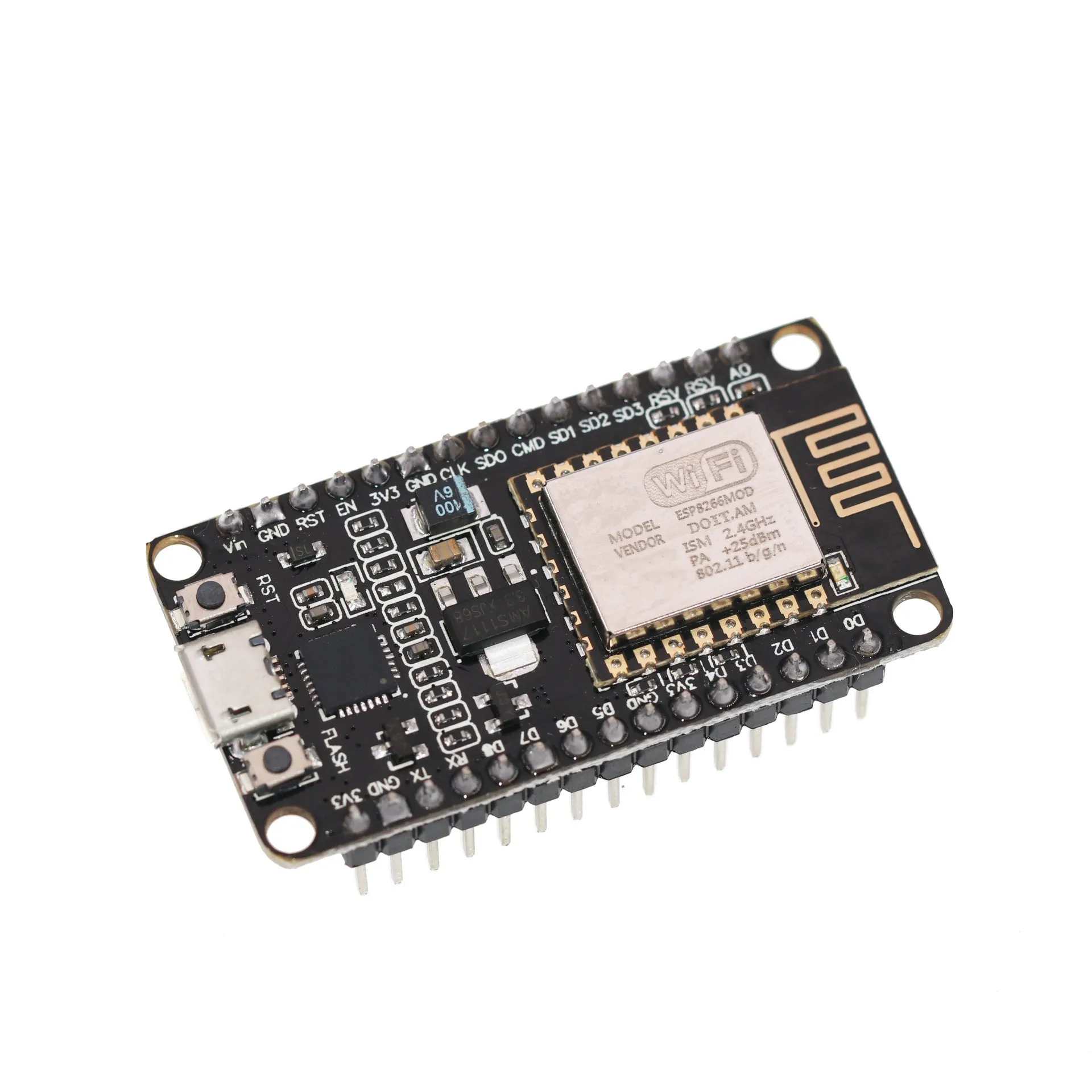
NodeMCU Lua ESP8266 Wi-Fi development board with CH340G USB interface, open-source programmable microcontroller for Arduino-like hardware I/O, enabling event-driven network applications and rapid IoT prototyping on compact 5mm*5mm MCU


NodeMCU Lua ESP8266 Wi-Fi development board with CH340G USB interface, open-source programmable microcontroller for Arduino-like hardware I/O, enabling event-driven network applications and rapid IoT prototyping on compact 5mm*5mm MCU
NodeMCU Lua Wi-Fi Development Board with ESP8266 Microcontroller and CH340G Interface

The NodeMCU Lua Wi-Fi development board combines the popular ESP8266 microcontroller with an accessible programming environment, creating a versatile platform for Internet of Things projects and connected device prototyping. This open-source board offers Arduino-like hardware I/O compatibility while introducing Lua scripting for interactive development, eliminating the constant downloading and resetting cycle common in traditional microcontroller programming. With built-in Wi-Fi capability through the ESP8266 chip and event-driven network APIs inspired by Node.js, this development board bridges the gap between basic electronics and web-enabled applications. The inclusion of the CH340G USB-to-serial interface provides reliable computer connectivity for both programming and power, making this a practical choice for educational settings, hobbyist projects, and rapid IoT prototyping scenarios where cost-effectiveness and ease of use are important considerations.
Features and Construction
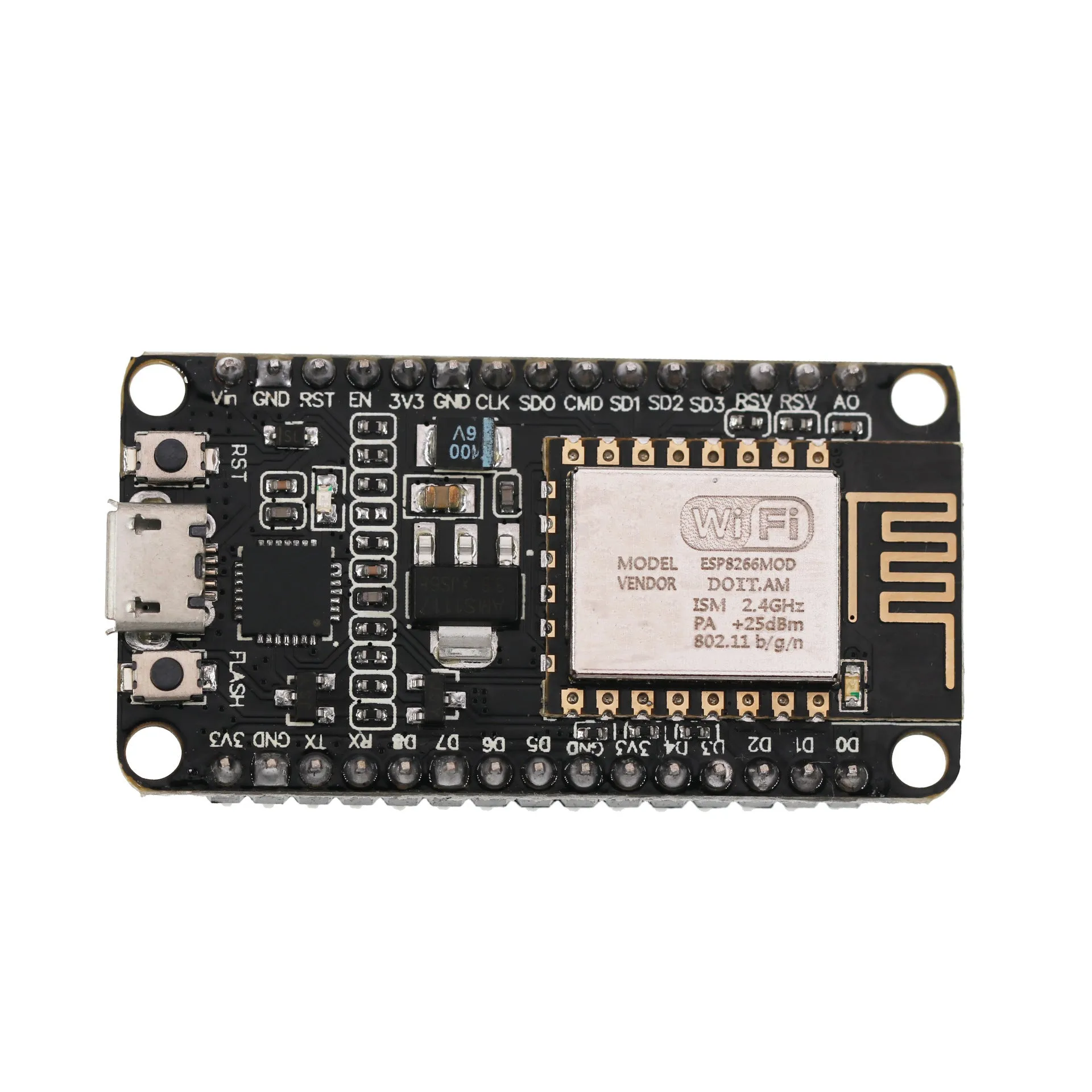
The NodeMCU development board centres around core components that enable Wi-Fi connectivity and accessible programming for IoT applications. With a focus on open-source development and hardware compatibility, this platform provides a stepping stone from basic electronics to network-enabled devices.
Material and Build
At the heart of this development board lies the ESP8266 microcontroller chip, measuring approximately 5mm by 5mm, which integrates Wi-Fi capability directly onto the silicon. The board utilises a CH340G USB-to-serial converter chip for stable communication with computers, replacing the originally specified CP2102 chip in many production units. Standard electronic components populate the PCB alongside metal pin headers that provide accessible connection points for external hardware. This construction follows typical development board conventions while prioritising reliable connectivity through the CH340G interface, which has become common in cost-effective microcontroller platforms.
Size and Practical Fit
The compact 5mm by 5mm ESP8266 microcontroller enables the development board to maintain reasonable dimensions while delivering full Wi-Fi functionality. Though exact board dimensions aren't specified in the source text, the platform follows standard development board form factors with accessible pin headers along the edges for hardware connections. This physical layout supports prototyping scenarios where space considerations matter, whether for embedded projects or educational demonstrations. The board's design prioritises practical accessibility over miniaturisation, ensuring all connection points remain easy to access during development and testing phases.
Uses and Placement

This development board serves multiple application scenarios ranging from educational introduction to professional prototyping, with particular strength in network-enabled projects. Its combination of accessible programming and built-in connectivity makes it suitable for various implementation contexts.
Event or Professional Use
For professional IoT development and prototyping, the NodeMCU board offers event-driven network APIs that facilitate code development in a Node.js style, particularly valuable for web-enabled applications. The ESP8266's integrated Wi-Fi allows direct internet connectivity without additional modules, supporting scenarios like sensor data logging to cloud services, remote device control, or real-time monitoring systems. The advanced API for hardware I/O reduces redundant configuration work, accelerating development cycles for proof-of-concept implementations and product prototypes. This makes the board particularly useful for technology companies developing connected products, research institutions exploring IoT applications, or engineering teams validating network-enabled device concepts before committing to custom hardware development.
Everyday Home Use
For hobbyists and home enthusiasts, the NodeMCU platform provides an accessible entry point to connected device projects through its Lua scripting environment and Arduino-like hardware compatibility. The interactive programming capability eliminates the constant downloading and resetting cycle, making iterative development more fluid for projects like smart home sensors, weather stations, or automated gardening systems. The open-source nature of the platform ensures extensive community support and example projects, while the cost-effective implementation makes experimentation financially accessible. This combination of features supports learning scenarios where understanding both hardware interfacing and network programming concepts matters, bridging the gap between simple electronics kits and professional development platforms.
Benefits and Buying Value

The NodeMCU development board delivers specific practical advantages through its component selection and programming approach, offering value through development efficiency and hardware accessibility. These benefits centre around reducing barriers to IoT development rather than luxury features or premium materials.
Reuse and Low Maintenance
The development board's construction with standard components and accessible pin headers supports reuse across multiple projects, as the hardware can be reprogrammed indefinitely for different applications. The CH340G interface chip provides reliable USB connectivity that reduces connection issues during development sessions, while the ESP8266's integrated Wi-Fi eliminates the need for additional network modules. The Lua scripting environment enables interactive testing without constant rebooting, maintaining development momentum and reducing time spent on programming cycles rather than actual coding. This practical approach to IoT development hardware prioritises functional reliability and straightforward reuse over cosmetic features or unnecessary embellishments.
Why Choose This Product
This NodeMCU development board stands out for its combination of the popular ESP8266 platform with an accessible Lua programming environment and reliable CH340G connectivity interface. Unlike some development boards that require separate Wi-Fi modules or complex setup procedures, this platform integrates connectivity directly while maintaining compatibility with Arduino-like hardware I/O concepts. The event-driven network API inspired by Node.js development patterns offers a more natural approach to web-enabled applications compared to traditional microcontroller programming models. For developers seeking a balance between capability and accessibility in IoT prototyping, this board provides a practical foundation that accelerates the journey from concept to functional prototype without unnecessary complexity or prohibitive cost barriers.